
Colosseum Tickets & Tours
The Colosseum is Rome’s most iconic landmark and tops many visitors’ bucket lists. It’s also one of the city’s busiest attractions. Tickets often sell out well in advance, and queues can stretch for hours. If you don’t book your tickets before you come, you might miss out on your chance to see this incredible site.
Here’s everything you need to know about getting your Colosseum tickets, booking guided tours, and planning your visit.
Practical information
- Address: Piazza del Colosseo, Rome
- Metro stop: Colosseo (Line B)
Opening hours
- January 2–February 15: 9 a.m. – 4:30 p.m.
- February 16–March 15: 9 a.m. – 5 p.m.
- March 16–Last Saturday of March: 9 a.m. – 5:30 p.m.
- Last Sunday of March–August 31: 9 a.m. – 7:15 p.m.
- September 1–30: 9 a.m. – 7 p.m.
- October 1–Last Saturday of October: 9 a.m. – 6:30 p.m.
- Last Sunday of October–December 31: 9 a.m. – 4:30 p.m.
- Last entry is always one hour before closing
Closures: January 1, May 1, December 25 Accessibility: Wheelchair access available, elevators to upper levels.
Ticket options and prices
Most Colosseum tickets are sold online only. The box office has limited availability, and you risk being turned away if you just show up hoping to get tickets. That’s why you should always book in advance. Make sure to compare your ticket prices and availability carefully.
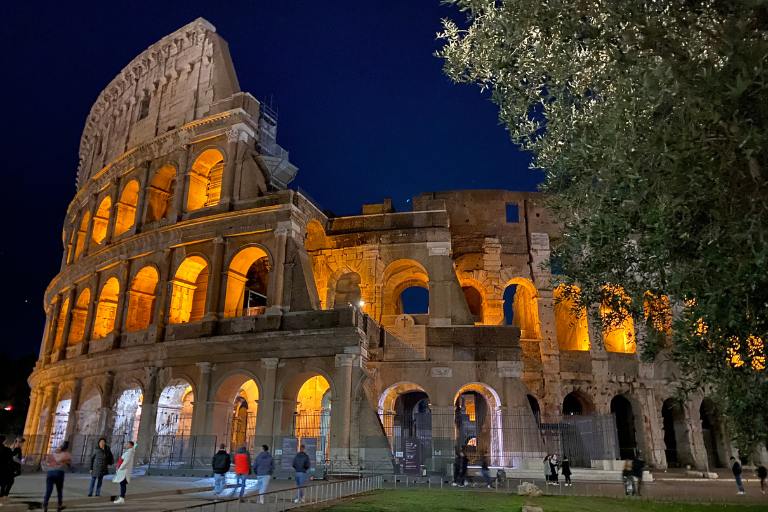
Standard entry ticket
Access to the Colosseum, Roman Forum and Palatine Hill. This combo ticket lets you explore all three sites over two days. Explore on your own with an audio guide or choose a guided visit. Perfect if you want to take your time. Book your tickets
Colosseum, underground and arena floor access combo
Walk on the arena floor where gladiators fought and explore the underground chambers where animals were kept. This combo ticket includes a guided tour and entry to the Roman Forum and Palatine Hill. Books yours today
Combo tickets
To make the most of your experience, combine your Colosseum tickets with another attraction. This option saves you the hassle of booking multiple attractions and allows you to explore stress-free.
- Colosseum + Vatican Museums: Visit both historic sites with an expert local guide Book yours today
- Mamertine Prison + Colosseum + Forum and Palentine Hill: Enhance your experience with this combo ticket Book yours today
- Catacombs of San Sebastiano + Colosseum, Arena, Forum and Palatine Hill: Immerse yourself in Ancient Rome with this tour. Book yours today
Guided tours
Tour the Colosseum with an expert guide who will bring the past to life with stories about gladiators, emperors and the underground network. Tours last between 1.5 to 3 hours and include skip-the-line access.
- Colosseum underground and arena floor at night: Experience the Colosseum in a unique way (with a guide). Book yours today
- Colosseum underground (max 6 people): Explore with an expert guide and discover the secrets of Ancient Rome on this small group tour. Books yours today
Rome city pass
The best value if you’re visiting multiple attractions. Includes skip-the-line entry to the Colosseum as we as the Roman Forum, Palatine Hill, Vatican Museums and Sistine Chapel. You also get access to St. Peter’s Basilica and your choice of Castel Sant’Angelo or the Pantheon. Saves you money and hours of waiting in separate ticket lines
Where is the Colosseum in Rome?
The Colosseum sits in the center of Rome, east of the Roman Forum, near the Colosseo metro station (Line B). The amphitheatre is in the Rione Monti district at Piazza del Colosseo. You can reach it easily by metro, bus or on foot from most parts of central Rome.
When you get to the Colosseo metro station, make sure to check out the displays. The newly opened station is like a mini-museum, with displays of the artifacts discovered during construction. You’ll see ancient Roman coins, pottery and building fragments found right beneath modern Rome.
FAQ
Do I need to print my ticket?
No. Digital tickets work fine. Show them on your phone at the entrance.
Is entry free on the first Sunday of the month?
Yes, but lines start forming before opening and can last 3+ hours. If you want free entry, arrive by 8:00 am or skip it entirely.
Can I bring a backpack?
Small bags are fine, but expect security checks. Large backpacks and suitcases are not allowed.
What if it rains?
The Colosseum is mostly uncovered and there is little to no coverage from bad weather. Bring an umbrella or a jacket if rain is forecast during the time slot your ticket is valid.
Can I cancel or change my ticket?
It depends on the ticket type. Most allow free cancellation up to 24 hours before your visit. Check the terms when booking.
Why visit the Colosseum?
The Colosseum is the largest amphitheatre ever built by the Romans, and it’s still standing after nearly 2,000 years. The arena could hold up to 50,000 people who came to watch gladiator fights, wild-animal hunts, and elaborate sea battles unfold.
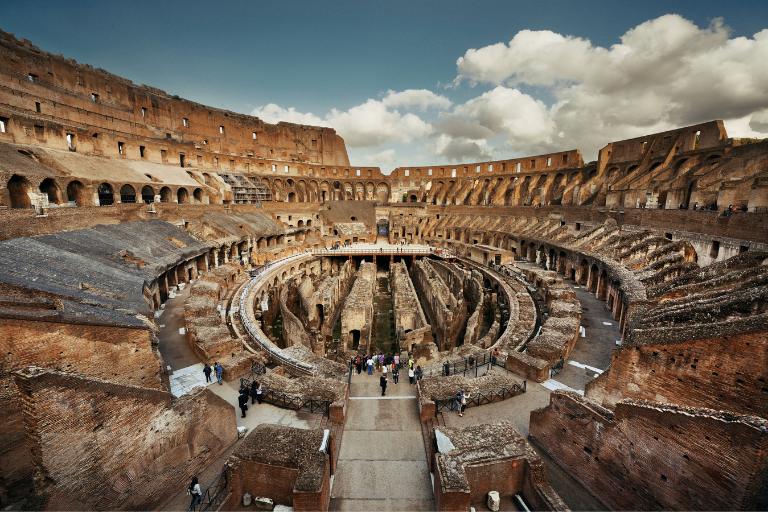
The Colosseum is also one of the Seven Wonders of the World, which is a great reason to see it. No photo does it justice. You need to experience the scale in person to fully grasp its magnificence.
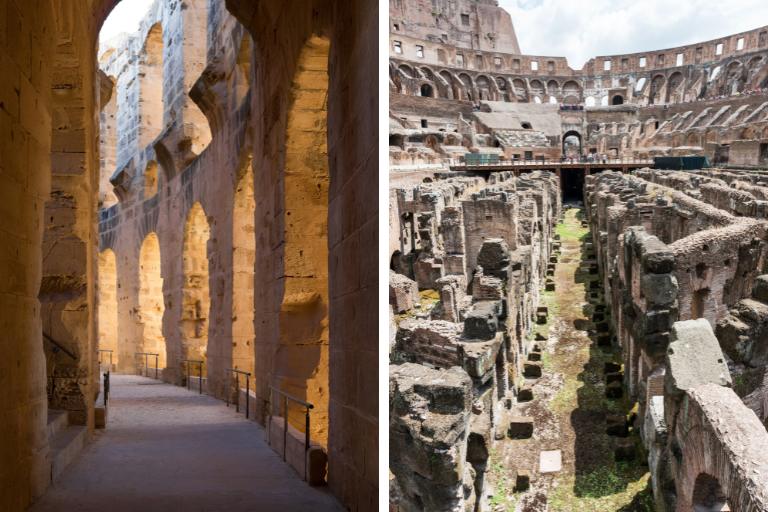
While the Colosseum’s floor is gone, it still tells a story. Learn about the mechanics of how the stages and trap doors were set up and operated to move people and animals through the different floors and the arena. Find out how the upper levels accommodated 50,000 spectators and organized them by social class. Stand on the arena floor exactly where many faced death.
History of the Colosseum
Emperor Vespasian ordered the construction of the Colosseum in 72 AD, and funded it by treasure looted from Jerusalem. The project took eight years and used limestone, brick and concrete hauled from quarries across the region.
His son Titus opened it in 80 AD with 100 days of games that killed 5,000 animals. Emperor Domitian later added the underground hypogeum and a fourth level, turning it into the empire’s greatest arena.
For over 400 years, Romans packed the stands to watch gladiators fight to the death, criminals thrown to wild animals and mock naval battles staged in a flooded arena. When Christianity spread, Emperor Honorius banned gladiator fights in 404 AD after a monk was killed trying to stop a match. Animal hunts continued until 523 AD.
The Colosseum was damaged by various earthquakes during the Middle Ages. Later, various popes stripped it for building materials. You can find marble and stone from the Colosseum in St. Peter’s Basilica and other churches. Pope Benedict XIV stopped the looting in 1749, declaring it holy ground because Christian martyrs died there.